
What Are Dental Implants Made Of?
Missing teeth affect more than just your smile’s appearance today. They impact your confidence, eating ability, and overall oral health significantly. But here’s what worries many patients: what are dental implants made of?
Dental implants are primarily crafted from titanium or zirconia—both exceptional biocompatible materials. These metals integrate seamlessly with your jawbone, creating permanent foundations. However, not all implant materials deliver equal quality or performance.
Poor material choices lead to implant failure, wasted money, and repeated surgeries. Your jawbone deserves better than substandard implant materials from questionable sources. The difference between grades and manufacturing standards dramatically affects long-term success.
This comprehensive guide dives deeper into implant material grades and specifications. We’ll explore why manufacturers like Parlay Implants use Grade 23 Medical Titanium. Understanding these critical distinctions helps you make confident, informed decisions.
Primary Dental Implant Materials
The world of implant dentistry offers two dominant materials. Each brings unique advantages to the table. Let’s explore what makes them special for tooth implants.
Titanium: The Gold Standard
Titanium has dominated implant dentistry for over five decades. Here is why this metal reigns supreme for replacement tooth solutions:
- First, titanium demonstrates remarkable biocompatible characteristics. Your body accepts it without rejection or adverse reactions. The metal facilitates osseointegration—bone literally fuses to the surface. This jawbone fusion creates a stable foundation for artificial teeth. Clinical studies show 95-98% success rates across diverse patient populations since their introduction in 1965.
- Second, titanium alloy variants provide exceptional mechanical strength. They withstand substantial bite forces over decades of use. Dental professionals rely on this proven track record. The two-piece system design offers flexibility during implant placement. You get an implant screw anchored into bone. Then an implant abutment connects to your dental crown.
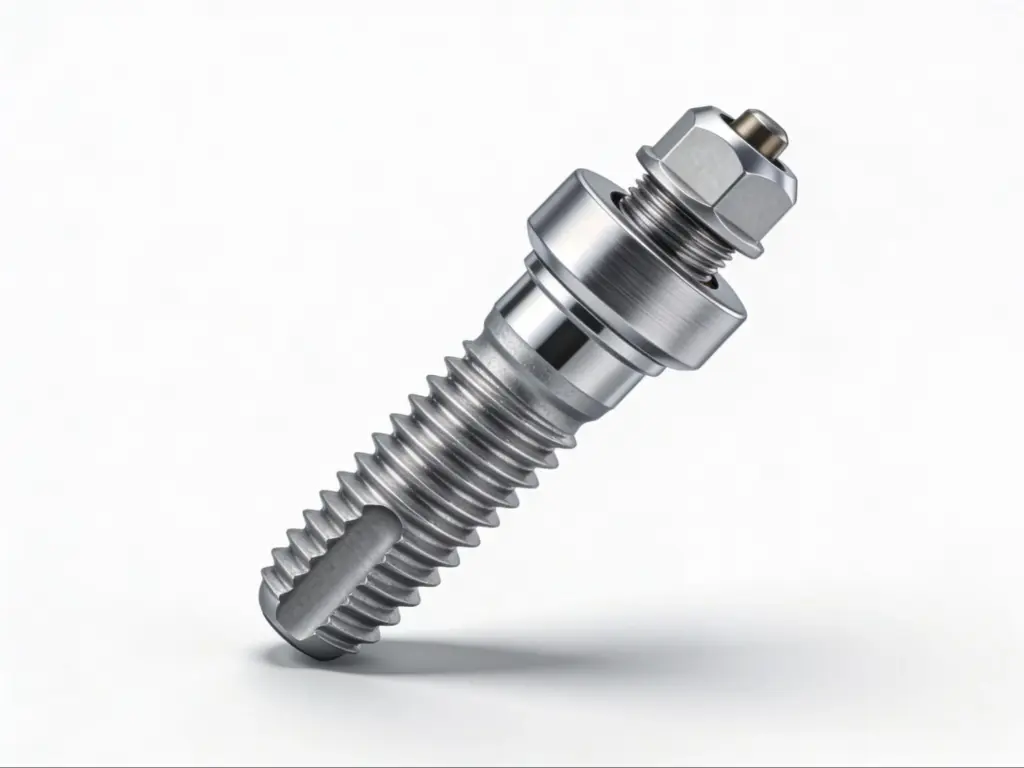
Not all titanium implants deliver identical performance or quality standards. The metal comes in different grades based on purity and composition. This distinction matters significantly for your oral health outcomes.
Commercially Pure (CP) Titanium contains minimal alloying elements:
- Grades 1 through 4 range from 99.5% to 98% pure titanium
- Grade 4 CP offers an optimal balance for most implant placement scenarios
- Contains controlled oxygen, iron, carbon, and nitrogen amounts
Titanium alloys provide enhanced mechanical properties for demanding situations:
- Ti-6Al-4V (Grade 5) includes 6% aluminum and 4% vanadium content
- Delivers significantly stronger resistance than pure titanium alternatives
- Superior fatigue resistance protects against repetitive chewing stresses
- The most common titanium alloy used globally for dental implants
Grade 23 Titanium (Ti-6Al-4V ELI) represents medical-grade excellence:
- “Extra Low Interstitial” specification ensures maximum purity and biocompatibility
- Reduced oxygen, nitrogen, and carbon content versus standard Grade 5
- Enhanced ductility prevents cracking under stress over time
- Preferred for surgical implants requiring ultimate tissue compatibility
- Premium manufacturers like Parlay Implants utilize Grade 23 titanium
Higher-grade titanium alloy materials excel for patients with powerful bite forces. Oral surgeons often recommend alloys for posterior region implant placement.
Explore Parlay’s Grade 23 Titanium Implants – 30 Sizes Available
Zirconia: The Metal-Free Alternative
Zirconia (yttria-stabilized zirconia ceramic) has emerged as a promising option. This metal-free alternative particularly benefits patients with metal sensitivities. What are dental implants made of when patients can’t tolerate titanium? Zirconia provides the answer.
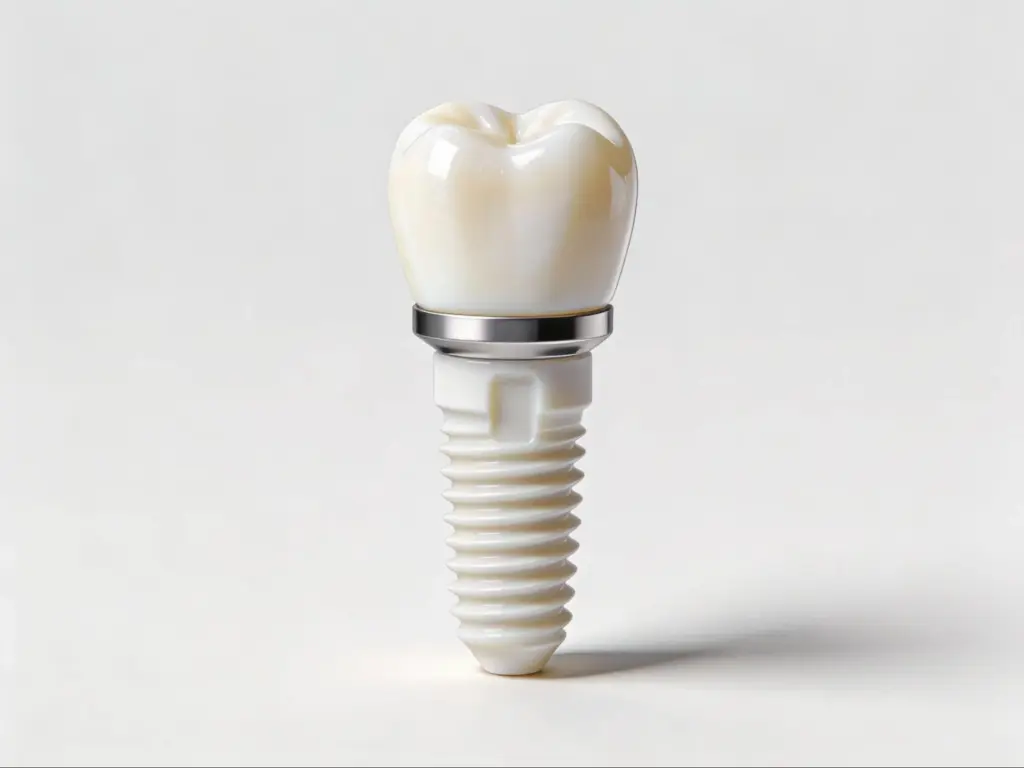
This white ceramic material offers several compelling advantages for patients:
- Tooth-colored appearance delivers superior aesthetics in visible smile zones
- Completely metal-free composition eliminates concerns about allergic reactions
- Biocompatible materials like zirconia resist corrosion in oral environments
- No metallic taste or galvanic reactions occur with zirconia implants
- A one-piece implant design can simplify certain surgical procedures significantly
However, zirconia comes with important considerations you should understand carefully:
- Less long-term clinical data exists compared to titanium’s 50-year record
- One-piece implants limit prosthetic flexibility for complex restoration cases
- Slightly harder to place during oral surgery than titanium alternatives
- Higher brittleness under extreme forces may increase fracture risks
- More challenging to remove if complications develop years later
Zirconia works best for patients with documented titanium allergies. It’s also ideal for aesthetic-critical anterior restorations in smiles. Many patients specifically request metal-free treatment options for personal reasons.
Alternative Implant Materials
Beyond titanium and zirconia, several alternative materials exist. Most remain experimental or limited in clinical application. Understanding their role helps contextualize mainstream choices.
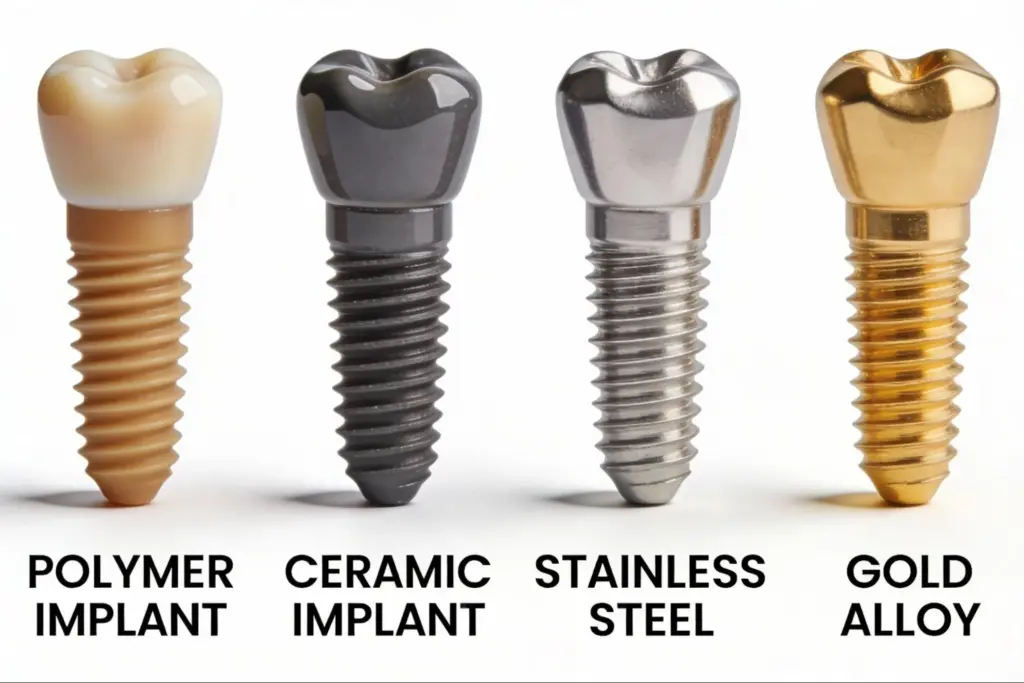
- Polymers offer biodegradable properties and aesthetic customization potential. Unfortunately, they lack the durability natural teeth demand. Dental professionals rarely recommend them for permanent solutions. Limited applications exist in temporary tooth replacement scenarios.
- Ceramics utilizing carbon-silicon compounds demonstrate robust mechanical characteristics. Their brittle nature undermines long-term reliability. Load-bearing posterior implants face significant failure risks. Research continues, but clinical adoption remains minimal.
- Other alternative metals include stainless steel, gold, and cobalt-chromium alloys. They resist corrosion admirably and offer decent durability. However, success rates fall dramatically below titanium standards. Modern implant dentistry has largely abandoned these materials. Oral surgeons prefer proven options with decades of validation.
The clinical reality? These alternatives show relatively poor performance metrics. Dental specialists stick with titanium and zirconia overwhelmingly.
Complete Implant System Components
Most discussions fixate exclusively on the implant screw itself. Successful tooth implants actually require multiple precision-engineered components working harmoniously.
Let’s break down what comprises a complete system:
- The implant screw serves as your new artificial tooth roots. It’s surgically placed directly into your jawbone tissue. Grade 4 or Grade 23 titanium typically forms this foundation. Osseointegration occurs over 3-6 months following surgical placement.
- The implant abutment functions as a critical connector piece. It bridges your implant screw and the visible dental crown. Materials include titanium, zirconia, or gold alloys, depending on needs. Regular and cervical designs accommodate different gum tissue profiles. Proper abutment selection ensures optimal aesthetic and functional outcomes.
- Cover screws protect implant threads during the healing phase. They prevent bone and tissue ingrowth into internal connections. This seemingly small component plays a vital role.
- Prosthetic screws secure your abutment to the implant fixture. Engineers design them for precise torque specifications and durability. Material compatibility across all components ensures long-lasting stability.
- Your dental crown forms the visible replacement tooth portion. Porcelain, composite materials, or metal options recreate a natural appearance. Modern porcelain crowns mimic natural teeth remarkably well.
Premium manufacturers offer complete package systems with all components. This approach guarantees material compatibility and simplifies inventory management. Parlay Implants provides comprehensive kits, including everything needed for implant placement.
Quality Standards to Look For
How do you distinguish premium dental implants from inferior products? Certifications and manufacturing standards provide crucial quality indicators.
- FDA 510(k) clearance remains mandatory for U.S. market access. This confirms safety and effectiveness through rigorous testing protocols. Never accept implants without verified FDA approval status.
- ISO 13485 certification represents international medical device quality standards. Certified facilities maintain validated manufacturing processes and quality controls. This ensures consistent material composition across production batches.
- CE marking indicates European conformity with health and safety requirements. It’s essential for international distribution and quality assurance.
- Material documentation should accompany every implant batch purchased. Verified titanium grade certificates prove exact alloy composition. Traceability allows tracking from raw material through the final product.
- Manufacturing location influences quality oversight and material sourcing practices. U.S.-manufactured implants often face stricter regulatory scrutiny. Parlay Implants manufactures everything domestically using U.S.-sourced materials exclusively.
Why do these certifications matter for your oral health? They represent validated processes ensuring safety and clinical reliability. Reputable dental professionals only use certified products from trusted suppliers.
Choosing the Right Implant Material for You
Several factors influence which implant materials work best for your situation. Dental specialists evaluate multiple considerations before recommending specific options.
Clinical needs include your jawbone density, implant placement location, and loading requirements. Patients with bone loss may need bone grafts or bone augmentation first. Those with uncontrolled diabetes or weakened immune systems require special evaluation.
Patient factors matter significantly in material selection for optimal outcomes:
- Known metal allergies may necessitate zirconia instead of titanium
- Aesthetic expectations for front teeth versus back teeth differ
- Medical history, including blood-clotting disorders, affects surgical placement
- Periodontal disease or gum disease history requires careful assessment
Long-term data strongly favor titanium with 50-plus years of validation. For most patients, Grade 4 CP or Grade 23 titanium alloy delivers optimal performance. These materials offer proven, long-lasting results that mimic natural teeth beautifully.
Maintaining Your Dental Implants Long-Term
Proper care ensures your implants last for decades without complications. Oral hygiene practices protect against peri-implant diseases that threaten stability.
Daily brushing and flossing remove food particles that harbor bacteria. Regular dentist appointments catch problems early before they become serious. Your dental professionals will monitor integration and gum tissue health closely.
Avoiding tooth decay around neighboring natural teeth protects your investment. Controlling gingivitis and gum disease prevents bone loss around implants. These simple habits maximize your comfort and enhance your appearance.
Conclusion: What are Dental Implants Made Of?
Dental implants are primarily made from titanium or zirconia—both exceptional biocompatible materials. Titanium implants deliver exceptional osseointegration with 95-98% success rates over decades of clinical use.
Zirconia offers metal-free alternatives for patients with sensitivities or aesthetic priorities. However, material quality varies significantly between manufacturers, and grades matter tremendously.
Understanding what dental implants are made of helps you choose wisely. Don’t settle for generic titanium when superior options exist today. Quality certifications like FDA approval and ISO 13485 ensure safety standards.
Ready to offer your patients premium implant solutions?
Parlay Implants manufactures Grade 23 Medical Titanium implants—100% designed and made in the USA. Every implant comes with complete component packages, including cover screws and abutments. Our products carry FDA approval, ISO 13485 certification, and full traceability.
Explore Parlay’s certified implant systems and discover why dental professionals trust American-made precision for long-lasting results.
FAQs
What is the best material for dental implants?
Grade 4 commercially pure titanium or Grade 23 titanium alloy offers superior performance. They provide proven biocompatible properties, excellent osseointegration rates, and 50+ years of clinical validation worldwide.
What is the downside to dental implants?
Dental implant surgery requires adequate jawbone density and good oral health. Costs range higher than dentures or bridgework. Implant failure occurs in roughly 5% of cases. Medical conditions may disqualify some candidates entirely.
Are dental implants 100% titanium?
Most dental implants use Grade 4 titanium (98% pure) or titanium alloy. Grade 5 and Grade 23 contain 90% titanium with aluminum-vanadium additions. Completely pure titanium lacks sufficient strength for implant applications.
Can you have an MRI with dental implants?
Yes, titanium dental implants are completely MRI-safe and non-magnetic. They won’t move, heat up, or interfere with imaging. Always inform technicians about implants, but they pose no safety concerns whatsoever.